
Stop trusting mutable references: how Eclipse Foundation projects should harden GitHub Actions after the Trivy compromise

Stop trusting mutable references: how Eclipse Foundation projects should harden GitHub Actions after the Trivy compromise

Mikaël Barbero

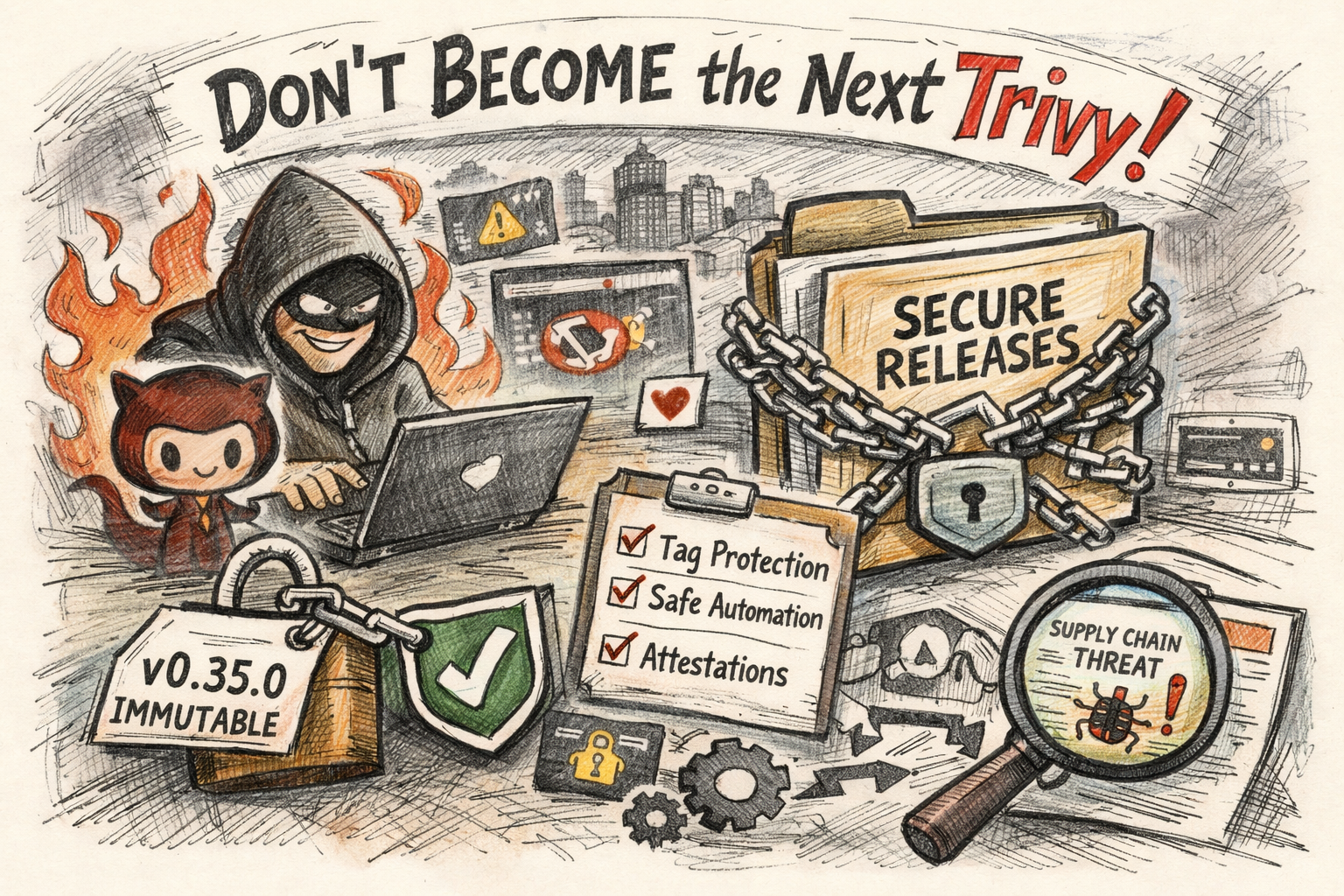
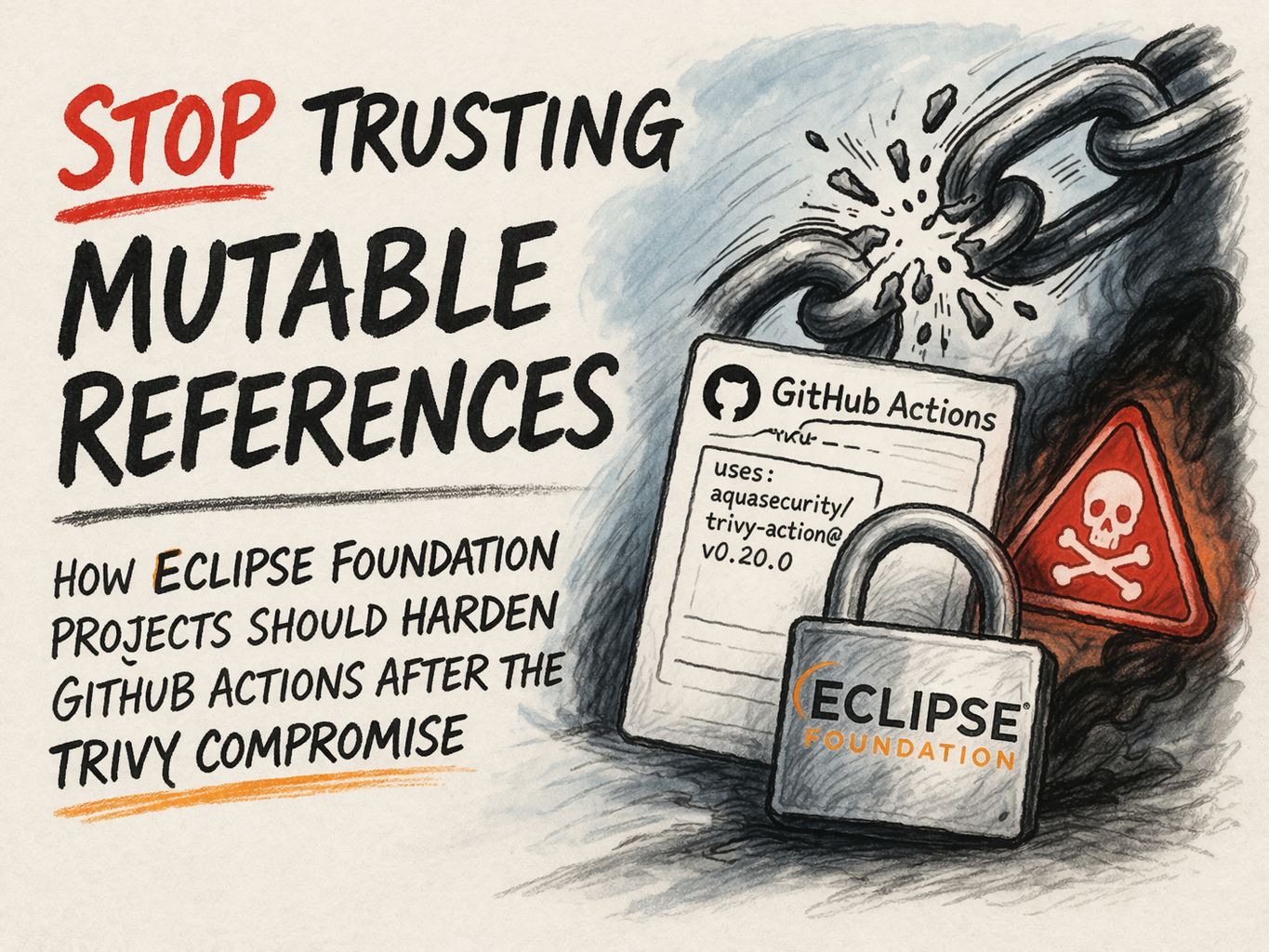
On March 19, 2026, an attacker used compromised credentials to publish a malicious Trivy v0.69.4 release, force-push 76 of 77 version tags in aquasecurity/trivy-action, and replace all 7 tags in aquasecurity/setup-trivy with malicious commits. On March 22, Aqua reported malicious Docker Hub images for versions 0.69.5 and 0.69.6. The malicious payload ran before the legitimate scanning logic and then let the workflow proceed normally. Every affected workflow looked fine. None of them were.

Open VSX security update, October 2025

Open VSX security update, October 2025

Mikaël Barbero

Over the past few weeks, the Open VSX team and the Eclipse Foundation have been responding to reports of leaked tokens and related malicious activity involving certain extensions hosted on the Open VSX Registry. We want to share a clear summary of what happened, what actions we’ve taken, and what improvements we’re implementing to strengthen the security of the ecosystem.

Vulnerability in Eclipse Open VSX Registry extension publication process

Vulnerability in Eclipse Open VSX Registry extension publication process

Mikaël Barbero

On May 4th, the Eclipse Foundation (EF) Security Team received a notification from researchers at Koi Security regarding a potential issue in the Eclipse Open VSX marketplace extension publication process. The EF Security Team immediately contacted the Eclipse Open VSX team, and upon confirming the issue, work on a fix was promptly initiated.

Strengthening Open Source Security: Eclipse Foundation Selected by the Sovereign Tech Agency for a New Service Agreement

Strengthening Open Source Security: Eclipse Foundation Selected by the Sovereign Tech Agency for a New Service Agreement

Mikaël Barbero

We are pleased to announce that the Eclipse Foundation has been selected by the Sovereign Tech Agency for a new service agreement. Through this collaboration, the Sovereign Tech Fund—a program of the Sovereign Tech Agency—will invest in the development, improvement, and maintenance of open digital base technologies worldwide, driving significant security enhancements across Eclipse Foundation projects.

Eclipse Foundation Security Statement: JARsigner Abuse by Malicious Actors

Eclipse Foundation Security Statement: JARsigner Abuse by Malicious Actors

Mikaël Barbero

Recent reports indicate that cybercriminals are exploiting the Windows DLL side-loading technique using the legitimate jarsigner.exe executable to propagate malware. This binary is commonly included in Java distributions such as Eclipse Temurin, which is also bundled with the Eclipse Integrated Development Environment (IDE). This has understandably raised concerns about the role of our software and whether the Eclipse Foundation or its projects bear any responsibility.

As the Head of Security at the Eclipse Foundation, I want to clarify the situation, explain DLL side-loading, and reaffirm our commitment to security and collaboration with the community. My goal is to provide a clear understanding of both the technical aspects of this misuse and our approach to maintaining a secure ecosystem.

Introducing the Updated Eclipse Foundation Security Policy

Introducing the Updated Eclipse Foundation Security Policy

Mikaël Barbero

On November 20, 2024, the Board of Director of the Eclipse Foundation approved version 1.2 of its Security Policy. This update brings significant enhancements aimed at improving the management, resolution, and disclosure of vulnerabilities within the Eclipse community. Here’s a rundown of the key changes and what they mean for Eclipse projects and users.

Exploring the Future of Open Source Security at OCX 2024

Exploring the Future of Open Source Security at OCX 2024

Mikaël Barbero

In the fast-paced world of software development, open source has emerged as a catalyst for innovation. But with this rapid growth comes an equally crucial responsibility: security. As open source continues to reshape the digital landscape, ensuring robust security measures is no longer optional; it’s essential. That’s why Open Community Experience (OCX) is placing a strong emphasis on the latest advancements in open source security.

Securing the Future: 2FA Now Mandatory for Eclipse Foundation Committers

Securing the Future: 2FA Now Mandatory for Eclipse Foundation Committers

Mikaël Barbero

The Eclipse Foundation is pleased to announce the successful implementation of two-factor authentication (2FA) for all committers on both gitlab.eclipse.org and github.com. This initiative, aimed at bolstering the security of our source code repositories, mandates that all users with write access to an Eclipse Project repository (commonly known as committers) on GitHub and the Eclipse Foundation GitLab instance must use 2FA.

Two-factor authentication adds an extra layer of security by requiring not only a password but also a second form of verification. This significantly reduces the risk of unauthorized access and enhances the overall security of Eclipse Foundation projects.

Understanding Software Provenance Attestation: The Roles of SLSA and in-toto

Understanding Software Provenance Attestation: The Roles of SLSA and in-toto

Mikaël Barbero

A software provenance attestation is a signed document that associates metadata with an artifact, encompassing details like the artifact’s origin, build steps, and dependencies. This information is critical for verifying the artifact’s authenticity and integrity. Featuring a cryptographic signature, provenance attestation ensures the document remains unaltered, playing a vital role in mitigating supply chain attacks. By scrutinizing the provenance of binaries, users can thwart the execution of malicious code on their systems. Let’s delve into some concrete examples: